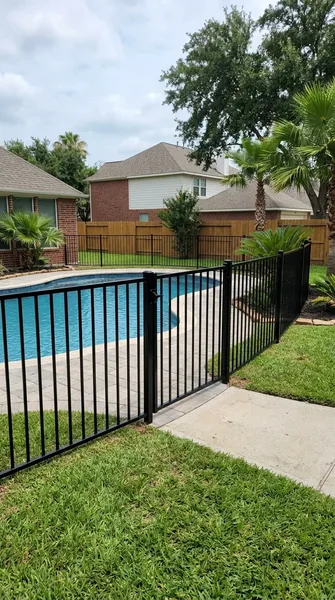
Understanding Texas Pool Fence Code Requirements
If you own a swimming pool in Houston, you're not just investing in backyard recreation. You're also taking on a legal responsibility to protect children and prevent accidental drowning. Texas pool fence codes are designed with safety in mind, and failure to comply can result in fines, liability issues, and worst of all, tragedy. The Texas Health and Safety Code, along with local Houston ordinances, sets specific standards that every pool owner must follow.
The primary purpose of these codes is to create a four-sided barrier that restricts unsupervised access to the pool area, particularly for young children. This means that your pool cannot be accessible from your home or other structures without passing through a controlled gate. Whether you're installing a new pool or upgrading an existing one, understanding these requirements upfront will save you time, money, and potential legal headaches. Many homeowners don't realize that pool fence installations aren't optional in Texas. They're mandatory, and inspectors take compliance seriously.
Pool Fence Height Requirements in Texas
One of the most frequently asked questions we receive at Houston Fence Company is about the correct height for a pool fence. According to Texas regulations and the International Swimming Pool and Spa Code, your pool fence must be at least 48 inches (4 feet) tall, measured from the ground level on the pool side of the fence. This height is not arbitrary. It's based on research showing that a 48-inch barrier effectively prevents most young children from climbing over or accessing the pool area without supervision.
The measurement is critical and often misunderstood. The fence height must be measured from the actual ground level where the pool is located, not from the deck or surrounding patio area. If your ground slopes or is uneven, the lowest point is what matters. Additionally, the fence must have no openings, gaps, or spaces larger than 4 inches, except for the gate opening. This prevents small children from squeezing through. When you choose Wood & Privacy Fence Installation for your pool barrier, our team ensures every measurement meets or exceeds these requirements, giving you peace of mind and full compliance.
Self-Closing Pool Gate Requirements: What You Need to Know
Perhaps the most important component of your pool fence is the gate itself, and Texas code is very specific about what a compliant gate must do. Every gate providing access to the pool area must be equipped with a self-closing mechanism and a self-latching device. This means the gate cannot simply swing open on its own or remain partially ajar. It must actively close behind anyone who passes through it, and it must latch automatically without requiring manual effort.
The self-closing pool gate must also open away from the pool, never toward it. This design prevents someone from accidentally swinging the gate open directly into the water. Additionally, the latch mechanism must be installed at least 54 inches above the ground level, making it difficult for young children to reach and operate. The gate itself must be as tall as the fence (48 inches minimum) and must not have any openings larger than 4 inches. If your current pool fence has a gate that doesn't meet these standards, upgrading it is not just recommended. It's legally required. Houston Fence Company can assess your existing installation and make any necessary adjustments to ensure your self-closing pool gate meets all Texas code requirements.
Four-Sided Barrier Requirements and Deck Access Rules
Texas law requires that your pool be completely surrounded by a four-sided barrier. This means the fence must enclose the pool on all sides, with no gaps or openings except for the required gate. If your pool is attached to your home, the house itself can serve as one side of the barrier, but the other three sides must have a compliant fence. Many homeowners in Houston are surprised to learn that simply having a fence around the perimeter of their yard is not sufficient. The barrier must specifically surround the pool itself.
One common question involves deck areas and direct access from the home. If you have a deck or patio directly connected to your pool, the code requires that you either install a fence between the deck and pool or ensure the door from your home to the deck is equipped with specific safety features. Some homeowners choose to install a Wood & Privacy Fence Installation that creates a separate enclosure for the pool area, keeping the deck and home on the outside of the barrier. Others use a combination of fencing and door alarms. The key is that there must be no uncontrolled pathway from your home directly into the pool area. Our team at Houston Fence Company can help you determine the best configuration for your specific property layout.
Choosing the Right Fence Material for Your Pool Barrier
When it comes to pool fence installation, material choice matters both for compliance and longevity. Wood & Privacy Fence Installation is a popular choice for pool barriers because it provides solid coverage, meets height requirements easily, and offers aesthetic appeal. Wood fences create an attractive privacy barrier while keeping your pool area secure and code-compliant. However, wood requires regular maintenance in Houston's humid climate to prevent rot and deterioration.
Vinyl & PVC Fence Installation is another excellent option for pool areas. Vinyl is resistant to moisture, requires minimal maintenance, and won't rot or splinter like wood. It's particularly well-suited to the Houston climate and can last for decades with proper care. Aluminum & Ornamental Iron Fencing can also work for pool barriers if it meets the height and gap requirements, though solid aluminum panels are more common than ornamental designs for pools. Chain Link Fence Installation is typically not recommended for pool barriers because it doesn't provide the solid barrier that codes often prefer and doesn't prevent visibility into the pool area. Whatever material you choose, ensure it meets all Texas code requirements and is installed by professionals who understand these regulations.
Getting Your Pool Fence Installation Inspected and Approved
After your pool fence installation is complete, you'll need to schedule an inspection with your local building department or code enforcement office. In Houston, this process is essential to ensure your fence meets all Texas requirements before you're allowed to use your pool. The inspector will verify the fence height, check the gate operation, measure gaps and openings, and confirm that the barrier completely surrounds the pool. They'll also verify that the self-closing mechanism on your gate functions properly and that the latch is at the correct height.
If your installation fails inspection, you'll be required to make corrections before receiving approval. This is why working with experienced professionals like Houston Fence Company from the start is so important. We understand exactly what inspectors are looking for and build our installations to exceed these standards. When you're ready to move forward with your pool fence installation, we encourage you to contact us for a free estimate. You can also reach us at (832) 981-7212 to discuss your specific pool area and get expert guidance on making your installation code-compliant the first time.
Looking for a professional tree service in Houston? Houston Fence Company responds fast for all your fence needs.
Get a Free Quote