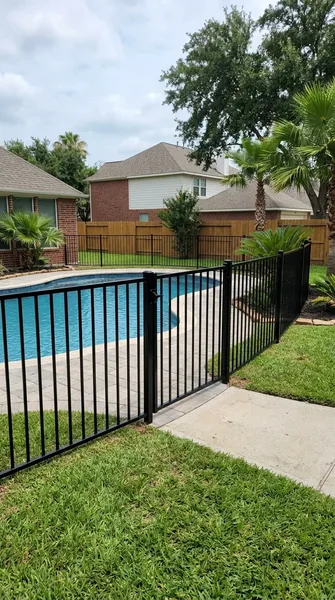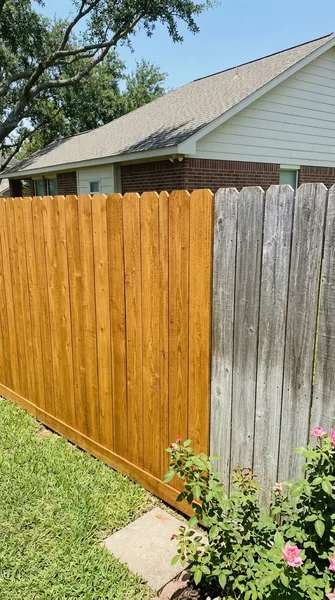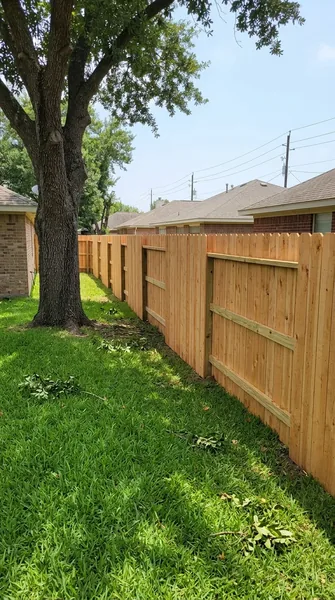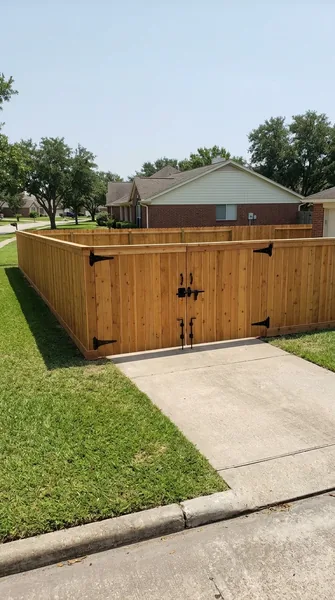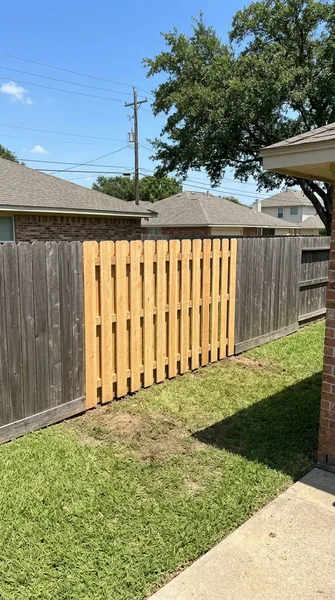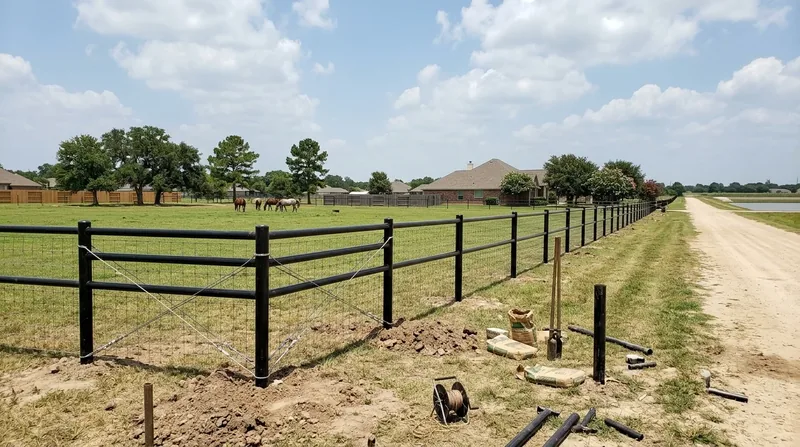




Farm fence installation in Houston demands more than standard residential fencing work. Acreage across Waller, Montgomery, Fort Bend and Brazoria counties sits on expansive clay soil that heaves posts seasonally, demands long straight runs over uneven terrain, and requires gates sized for trailers and working equipment. Ranch properties need fencing that holds under load, resists weather cycles that swell and shrink the ground beneath it, and performs reliably across months between maintenance visits. We install ranch rail, no-climb horse fence, field wire, and pipe fencing built to stay plumb and functional on working land. Since 2015, we have set posts deep in concrete, braced corners for gate stress, and kept livestock secure and equipment contained on properties from rural Conroe to the suburban edges of Sugar Land and Katy.
Why Farm and Ranch Fencing Matters on Houston-Area Acreage
Residential fence repair is one task; ranch fencing is another. A leaning backyard fence in the Heights or Cypress is usually a post problem caused by clay heave. A failing ranch fence across 20 acres of pasture is a liability, a loss of containment, and a safety issue for animals and equipment. The Houston clay cycle, wet in spring and summer and dry in late August and September, moves soil beneath post footings. Without posts set deep in concrete and spaced correctly, fence lines sag, wires go slack, and gates bind. Working land also demands straight lines over long runs, braced corners that hold gate hinges and operator loads, and materials that resist rust and rot in Gulf Coast humidity.
- We set posts 36 to 42 inches deep in concrete to anchor them against seasonal ground movement and prevent heave.
- We space posts correctly for the load and material, whether ranch rail, horse fence, or field wire.
- We brace corners and gate openings to handle the stress of hinges, operators, and livestock pushing against the fence.
- We use galvanized or powder-coated hardware and fasteners to resist rust in the humid Texas climate.
- We size gates for equipment passage, trailers, and working vehicles typical on acreage in the region.
Proper ranch fencing holds its line, keeps animals and equipment contained, and lets you focus on the property, not fence repair.
Key info: A failing ranch fence is not a cosmetic issue. Loose wire, sagging rails, or broken gates mean lost containment, liability if an animal escapes or a gate fails on someone, and expensive emergency repairs during storm season or breeding season when you need the fence most.
For more information on working with us on fencing projects across Greater Houston, visit our service areas page to see the counties and communities we serve.
How We Install Ranch Rail and Horse Fence in Houston and Beyond
Ranch fencing is installed in phases: site walk and utility locate, post placement and concrete setting, rail or wire installation, and gate fitting. Each step is critical. A utility locate call to 811 is required by Texas law before digging any post hole. Once the line is marked and utilities are clear, we set posts using a plumb level, measure spacing to the nearest half inch, and backfill with concrete. Rails or wire are then installed under tension, and gates are hung and tested. On acreage in Waller or Fort Bend counties, this work can take days or weeks depending on the acreage and terrain.
- We call 811 for a free utility locate before any digging begins, as required by Texas law.
- We mark the fence line and verify it with the customer before we set the first post.
- We dig post holes 36 to 42 inches deep, set posts plumb, and backfill with concrete for permanent hold.
- We install rails, wire, or pipe under correct tension and fasten all hardware with galvanized fasteners.
- We hang gates, test hinges and latches, and ensure equipment gates swing freely and close securely.
This methodical approach prevents the lean, sag, and binding that plague ranch fences installed in haste or without proper post depth.
Local example: A property owner in Pearland with 15 acres of pasture installed a ranch rail fence with posts set only 24 inches deep and no concrete. Within one wet season, the clay swelled and pushed posts out of plumb by 2 to 3 inches. We reset the posts 36 inches deep in concrete, re-leveled the rails, and the fence has held straight for three years.
If you have an existing fence that is leaning or failing, we also offer fence post repair and replacement for individual posts or full sections.
Ranch Fencing Methods and Materials
| Fencing Type | Description | Best For |
|---|---|---|
| Ranch Rail | Horizontal rails (typically 2x6 or 2x8 pressure-treated pine or cedar) mortised or bolted to posts. Classic appearance, long lines visible from a distance. | Pasture, horse properties, acreage with aesthetic value. Horses and cattle respect the visual boundary. |
| No-Climb Horse Fence | Horizontal wires or mesh (typically 2x4 inch openings) welded to vertical supports. Prevents hooves from catching, resists climbing. | Horse and livestock containment. Safer than conventional wire fencing, particularly for young or excitable animals. |
| Field Wire and Barbed Wire | Galvanized wire (smooth or barbed) strung between posts under tension, typically 4 or 5 strands. Lightweight, economical, requires maintenance. | Large acreage, cattle operations, temporary or secondary containment. Fastest to install on long runs. |
| Pipe Fencing | Steel pipe (typically 1.5 to 2 inch diameter) welded or bolted to posts or directly buried. Extremely durable, high visibility, high initial cost. | High-traffic gates, equipment enclosures, properties requiring maximum durability and low maintenance over decades. |
Each method balances cost, durability, maintenance, and the specific use of the property. Ranch rail looks traditional and lasts 15 to 20 years with post care. No-climb horse fence is safer for animals and lasts 20 to 25 years. Field wire is economical but requires re-tensioning and occasional repair. Pipe is the longest-lasting option and requires almost no maintenance. We recommend the method that fits your budget, intended use, and long-term plan for the property.
Farm and Ranch Fencing Cost in Houston: What to Expect
Ranch fencing on acreage typically starts at $12 to $18 per linear foot for basic field wire or ranch rail on level ground with good access. Costs climb with terrain, material choice, gate complexity, and distance from our service base in Houston. A 500-foot run of no-climb horse fence on a Waller County property with two equipment gates runs roughly $6,000 to $9,000 before permits or site prep. A mile of field wire with braced corners and three gates can range from $10,000 to $16,000. Pipe fencing is typically $20 to $35 per linear foot because of material and welding labor.
Several factors affect the final price. Terrain that slopes or has drainage ditches requires stepped or racked installation, which takes more time. Soil conditions influence post hole digging and concrete volume. Distance from Houston (properties in Conroe or Brazoria county may incur travel time) and site access for equipment matter. The number and size of gates, whether you need an automatic gate operator for equipment access, and any existing fence removal also affect cost. We recommend getting two or three estimates from contractors familiar with acreage work, because cookie-cutter pricing does not apply to ranch fencing.
Visit our pricing page for detailed breakdowns by material and method, or call us at (832) 981-7212 for a free on-site estimate. We respond within 24 hours and assess your terrain, material preference, and gate needs in person.
Farm and Ranch Fencing Near Me: What Houston Homeowners Should Know
If you own acreage in the Houston area, Katy, Sugar Land, Pearland, The Woodlands, Spring, Cypress, or any of the rural counties serving our region, hiring a contractor with experience on working land is essential. Too many general fence companies treat ranch fencing as a scaled-up version of residential privacy fencing, and they miss the technical details that matter. Post depth, concrete volume, gate bracing, and long-line tension are not negotiable on acreage. When you call a contractor, ask how deep they set posts, whether they use concrete for all posts or only some, how they brace corners, and whether they have references on ranch or horse properties.
We are AFA Member Installers (American Fence Association) and have worked ranch fencing across Fort Bend, Waller, Montgomery, and Brazoria counties since 2015. We understand the clay soil, the seasonal heave cycle, and the equipment and animal loads that working fences must handle. When you call (832) 981-7212, you reach people who have set thousands of posts, not a call center. We walk your property, explain what will hold and why, and give you a firm estimate before we start.
Ready to move forward? Contact us for a free estimate and let us show you the difference that proper ranch fencing makes on your acreage.
Farm & Ranch Fencing in Houston: Pricing Guide
| Service | Price | Details |
|---|---|---|
| Ranch Rail Fencing | Starting at $12/ft | Pressure-treated pine rails, posts set 36 inches deep in concrete, standard spacing on level terrain |
| No-Climb Horse Fence | Starting at $15/ft | Welded wire mesh panels, galvanized hardware, posts set 36 inches deep, 4-inch openings for hoof safety |
| Field Wire and Barbed Wire | Starting at $8/ft | Galvanized wire strung under tension, 4 to 5 strands typical, economical for large acreage and cattle |
| Pipe Fencing | Starting at $22/ft | Steel pipe welded to posts, maximum durability and low maintenance, ideal for equipment gates and high-traffic areas |
| Gates and Operators | From $800 to $3,500 | Equipment gates sized for trailers, hinges and latches rated for load, automatic operators available for convenience |
| Free Estimate | No charge | On-site walk, utility locate coordination, material and method recommendation, firm pricing, 24-hour response |
Indicative pricing, free personalized estimate within 24h at (832) 981-7212.