Fence Company in Houston, TX: Installation, Repair & Gates
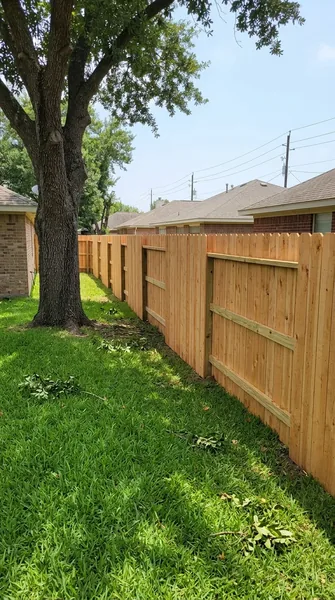
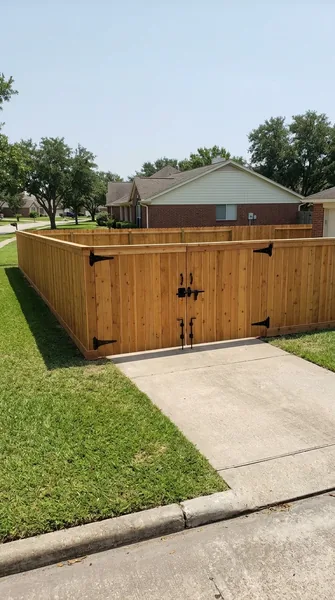
Houston Fence Company serves homeowners across Houston and the surrounding areas with new fence installation, repair, gates, and storm damage restoration. Whether you are in the Heights, Clear Lake, Katy, Sugar Land, or any of the master-planned subdivisions where every lot is fenced, we understand the specific challenges this region presents: expansive clay soil that moves with every wet-and-dry cycle, Gulf humidity that tests wood at the ground line, and hurricane and derecho season that can flatten a fence line in hours. We install wood and privacy fences, vinyl, chain link, and aluminum or ornamental iron. We repair leaning fences, reset failed posts, rebuild after storms, and install gates and pool barriers to code.
When homeowners search for a fence company near me in Houston, they often call because a fence has started to lean, a gate is dragging, or a storm has knocked panels flat. We walk the entire fence line, diagnose what has actually failed, and quote repair or replacement honestly. The same crew does your work from start to finish. Call (832) 981-7212 for a free estimate.
Why Fences Lean in Houston: Clay Soil and Rotted Posts
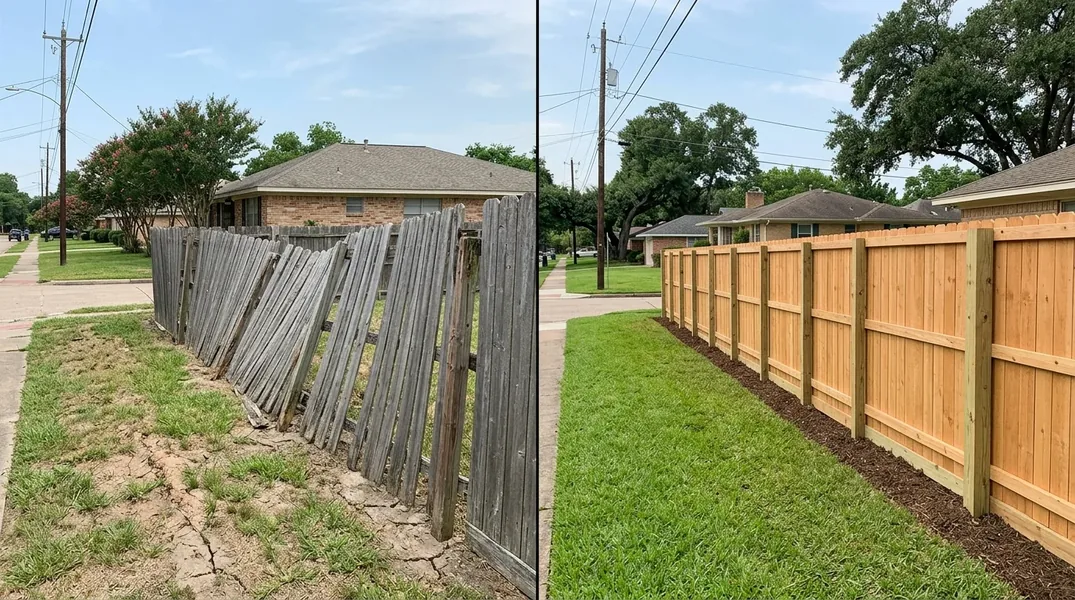
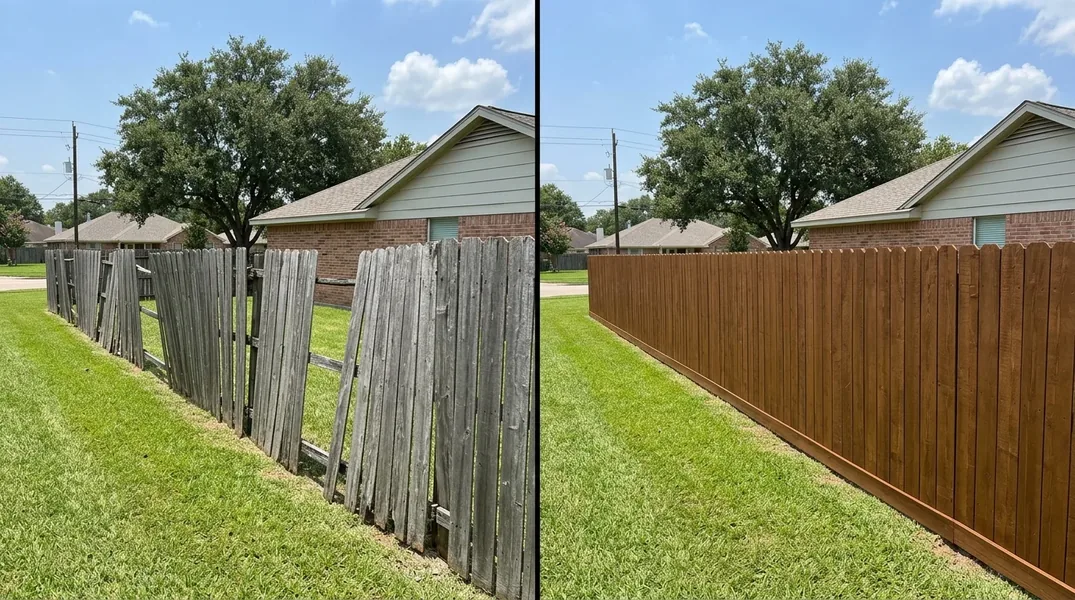
Almost every leaning fence in Houston is a post problem, not a panel problem. The expansive clay beneath this area swells when saturated and shrinks as it dries, working a fence post back and forth season after season. Over time, that movement racks the post out of plumb. At the same time, humidity keeps wood damp right at the ground line, exactly where the post carries the load, and untreated wood decays there first. A pressure-treated pine post set in concrete may hold fifteen years; a cedar post in the same soil often fails sooner at the base. The result is a fence that leans incrementally until one section finally catches your eye, but by then several posts along the run have already begun to fail.
We assess a leaning fence by walking the whole line, testing every post rather than the one that moved most visibly. We check whether the concrete footing itself has heaved or whether the post has rotted or shifted inside a sound footing. The distinction matters because it determines whether repair makes sense. A fence with sound pickets, rails, and stringers but a handful of failed posts is worth repairing. Resetting or replacing those posts in fresh concrete saves the rest of the fence and costs far less than starting over. But a fence where posts have decayed at the ground line along the whole run is at end of life. Repairing it section by section over five years costs more than replacing it once. We quote both options so you can make an informed choice. When we find rotted wood, we replace it. Moisture at the ground line is the cause. We do not perform termite or pest inspections, apply chemical treatments, or carry out pest control, which is a separate regulated trade in Texas. Call (832) 981-7212 to discuss what your fence actually needs.
Storm Damage Fence Repair in Houston
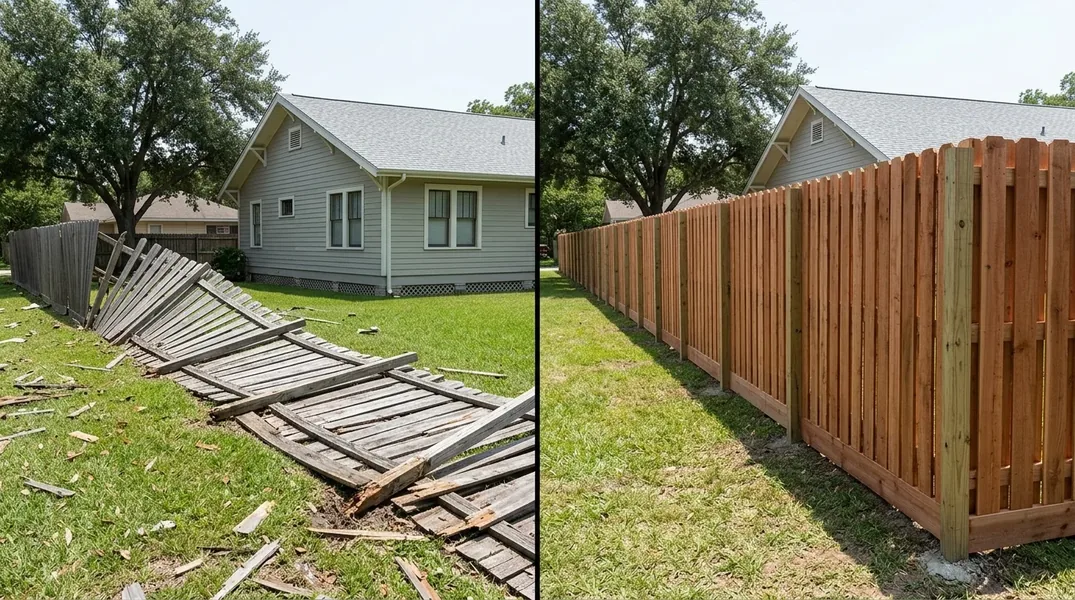
Hurricane season, spring storms, and straight-line derechos can push an entire fence line flat, snap posts at grade, or scatter panels across the yard. When that happens, rebuilding is a chance to do it better: posts set deeper in fresh concrete, proper spacing and bracing, and materials chosen for durability rather than what was there before. We provide a free damage assessment, photograph the fence section by section, and prepare a written estimate that you may choose to submit to your insurance carrier. We help you document what happened and what it will cost to repair. Coverage decisions rest with your carrier, and we do not promise or imply that any particular claim will be approved or that any part of your deductible will be covered. We are fence contractors, not adjusters, and we do not act on your behalf with your insurer.
If you have storm damage, contact us with photos if you have them, and we will schedule a time to walk the property and give you an honest assessment of what the fence needs and what it will cost to make it right.
Cedar, Pine, Vinyl or Chain Link: Choosing for This Climate
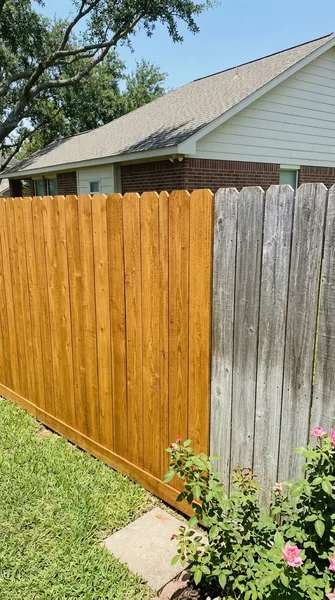
Choosing a fence material for Houston means weighing maintenance, lifespan, and cost under this sun and humidity. Cedar looks beautiful and weathers to gray, but under this climate it needs cleaning and re-staining every two to three years to prevent graying and to extend its life toward twenty years. Without that cycle, expect closer to ten. Pressure-treated pine costs less, holds up well with regular maintenance, and is the smarter budget call if you want a wood fence without the staining schedule. Vinyl requires almost no maintenance, resists rot and insect damage, and will not splinter or warp, but it can look plastic and it does not weather gracefully if left in direct sun for decades. Chain link is the toughest material per dollar, and gauge and mesh size determine how long it lasts. Galvanized steel holds up better than black powder-coated in salt air near the coast, but both will eventually rust. Aluminum and ornamental iron are ideal for pool barriers, front-yard accents, and anywhere you need a fence to rack to follow grade without looking unfinished. All of these materials are quoted by the linear foot on site because slope, access, existing fence removal, and gate count change the actual cost.
We can help you weigh these choices for your specific lot and use. Visit our pages on wood and privacy fences, vinyl fencing, and aluminum and ornamental iron for more detail on each material, or call for a conversation about what will work best for your home and budget.
Permits, HOA Rules, Property Lines & Pool Barriers
Permits, setback rules, height limits, and material restrictions vary significantly across Houston and the surrounding jurisdictions. In most areas, fence height is capped at four to six feet, and setback from the property line is required, but requirements differ by city and county. Many master-planned subdivisions impose additional restrictions through HOA architectural standards, commonly governing height, material, and color. Cedar is standard in many communities, and approval from the architectural committee is usually required before work begins. If your home is in an HOA community or subject to deed restrictions, check those documents and confirm approval in writing before you start. We work from the line you identify on your property, using your existing survey or plat. Determining a property boundary is the work of a licensed land surveyor, and we do not offer boundary surveys or opinions on where a line lies. Confirming your fence line and any neighbor or association consent in writing beforehand prevents disputes later.
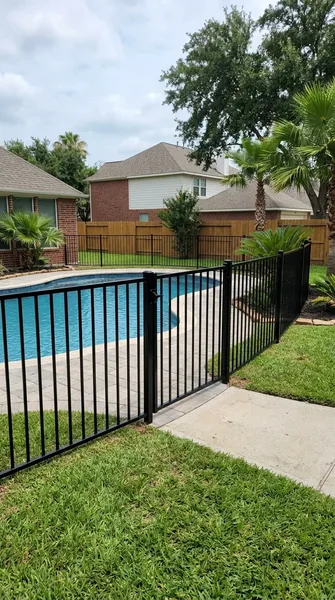
Pool barriers are installed to meet the pool barrier codes that apply at your address, with self-closing self-latching hardware and proper spacing. We do not certify compliance, and final determination rests with the local building official having jurisdiction. No barrier replaces constant supervision of children and swimmers. Before we set any posts, we request Texas 811 utility locates to mark participating operators such as electric, gas, water, and sewer. Locates do not mark private lines such as irrigation or landscape lighting, so tell us about those. Requirements vary considerably across jurisdictions. Always verify with the Houston building department and your HOA before starting your project. Call Houston Fence Company with questions about what applies to your property.
Ready to get started? Houston Fence Company serves in Houston and surrounding areas. Book your free on-site estimate today.
Get Your Free Estimate